Why Agentic Workflows are Breaking Enterprise Budgets and Shifting the AI Industry Toward Outcome-Based Pricing
I. Introduction
Traditional software is a predictable operating expense. Companies pay a fixed monthly or yearly fee per user. Per-token pricing is challenging this model completely by introducing variable costs. An engineering team using autonomous coding agents can burn through large budgets because of a single recursive loop error.
Per-token pricing is fundamentally broken for enterprise adoption because finance departments reject uncapped and unpredictable liabilities. Tokens are also the wrong metric. They measure compute consumption, or how much an AI “talks,” instead of business value, such as tasks completed, tickets resolved, or hours saved.
From 2024 to 2025, the AI industry focused on a race to the bottom in token pricing. Open-weight models, inference optimization, and hyperscaler subsidies pushed token prices down by as much as 90%. But lower prices did not solve the core problem.
Simple chatbots cost fractions of a cent. Autonomous agents such as Claude Code or Codex create an entirely different cost structure. These systems reason in loops, execute tools, reread codebases, and maintain persistent memory sessions. The traditional pay-per-token model is incompatible with agentic workflows because it ignores infrastructure overhead, recursive loops, and long-running sessions.
Enterprise buyers increasingly do not care about how many tokens were processed. They care about how much work was completed.
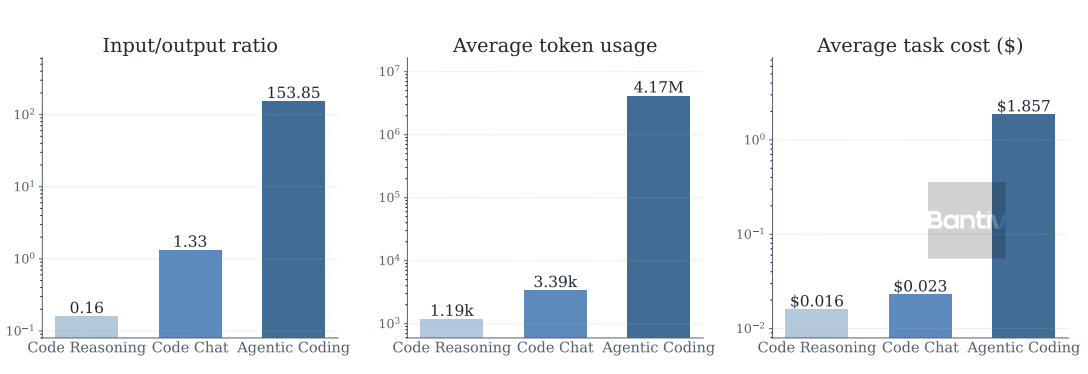
According to Gartner, autonomous agents consume between 5x and 30x more tokens than traditional chatbots for the same amount of work. Agentic workloads also produce extremely high input-to-output token ratios, sometimes requiring hundreds of input tokens for every single output token.
Traditional LLMs are stateless. You send a prompt, receive an answer, and the session ends. Autonomous agents require persistent memory. To remember previous actions and objectives, the model must keep its KV cache active inside GPU memory. This creates continuous infrastructure costs even while the agent waits for a compiler, API response, or database query.
Tool-augmented agents consume roughly 3x more memory than traditional models and up to 5.4x more in complex scenarios.
Coding agents are especially expensive because they operate recursively and spending, as we’ll see, in processes related to input and reingestion.
If a bug requires 15 iterations to fix, the agent may pass the entire codebase through the context window 15 consecutive times. A task that should cost $0.05 can become a $45 liability.
Research also shows that only 12%–18% of tokens in complex agentic workflows produce useful output. The remaining 82%–88% are spent on reasoning overhead, retries, error recovery, and context management. That explains partially why agentic coding tasks consume orders of magnitude more tokens than normal chat workloads.
II. Tokenmaxxing and bad incentives
Tokenmaxxing turns token usage into a status metric.
The more tokens a team consumes, the more “AI-native” or productive it appears, regardless of whether the work creates real value. In many organizations, token volume has become the new proxy for output, similar to how IBM’s LOC or Lines of Code was once used as a flawed engineering productivity metric.
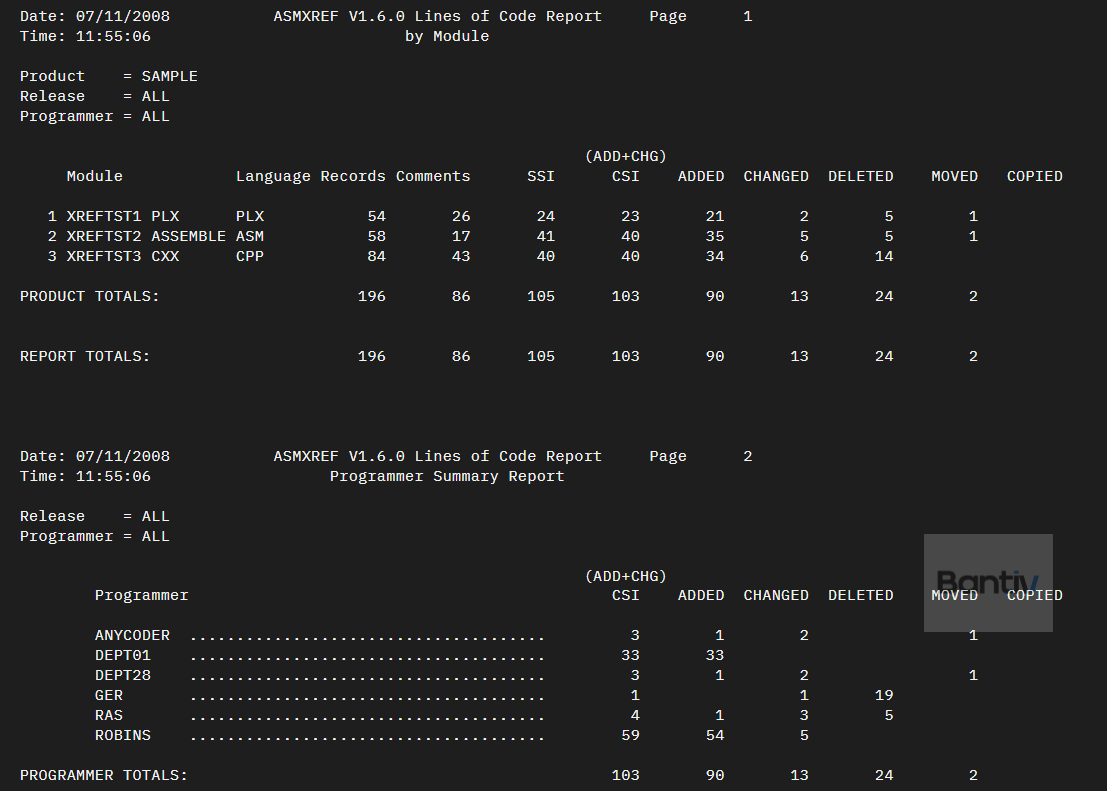
Large codebases often reflected inefficiency rather than quality. Excessive token usage works the same way. High consumption frequently represents redundant prompting, recursive reasoning, inefficient workflows, or performative AI usage instead of better results.
These incentives distort behavior. Employees optimize for token consumption rather than efficiency, accuracy, or ROI. Consumption itself becomes the KPI.
The consequences are already visible.
Meta employees reportedly consumed 60.2 trillion tokens in 30 days. At standard API prices, that volume would have cost around $900 million. Internal token leaderboards encouraged employees to maximize usage regardless of outcomes.
Shopify introduced “circuit breakers” designed to stop runaway agents. These systems monitor spending spikes in real time and automatically cut access when costs rise too quickly.
A research paper of token consumption found that many high-cost agent runs are dominated by redundant file access, rereading, and repeated editing rather than productive progress.
III. Where the Money Burned: Uber, Salesforce, and Microsoft
This shift reveals exactly how major enterprises are reacting to token-centered expenses and struggling to adapt to agentic budgeting.
Salesforce
Salesforce CRM -2.02%↓ originally launched Agentforce pricing at $2 per conversation. Enterprise customers rejected the model because conversational token billing created unpredictable spending.
By early 2026, Salesforce moved back toward flat-rate enterprise licenses starting at more than $125 per user per month.
This change gave CFOs predictable contracts and fixed operating costs similar to traditional enterprise software.
To reduce procurement friction, Salesforce introduced the Agentic Enterprise License Agreement (AELA), a seat-based pricing model for autonomous agents.
The shift worked commercially. Agentforce reportedly reached $540 million ARR by Q3 FY2026, with AELA becoming Salesforce’s top-performing product.
Salesforce also shifted toward “Flex Credits,” charging customers per autonomous action rather than per token consumed.
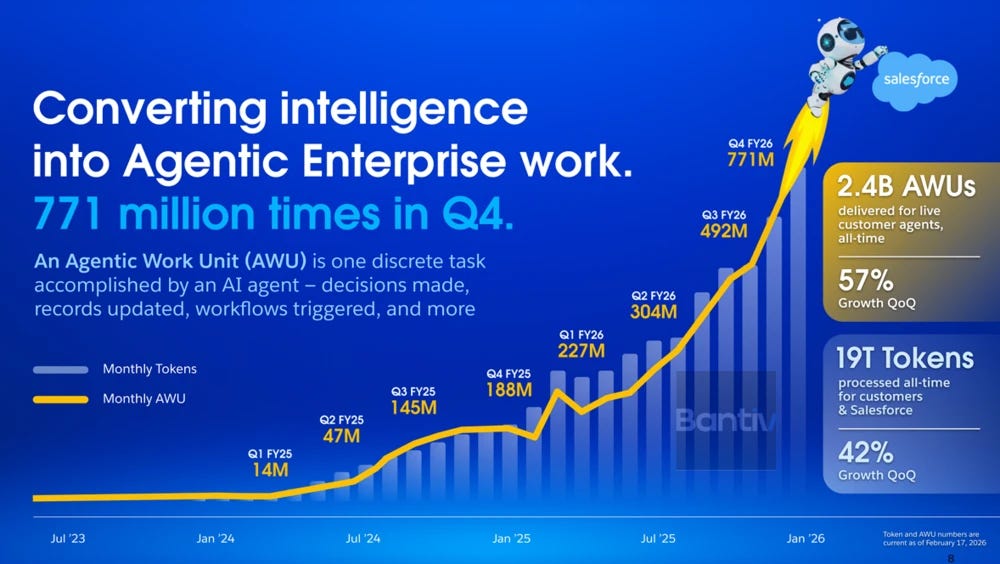
The company increasingly tracks Agentic Work Units (AWUs) instead of raw token volume. By Q4 FY26, Salesforce reported delivering 2.4 billion AWUs against more than 19 trillion processed tokens.
The important metric became completed work, not compute usage.
Uber
Uber UBER -2.76%↓ gave autonomous coding agents to roughly 5,000 software engineers.
Unlike chatbots, coding agents continuously scan repositories, execute terminal commands, run tests, and self-correct code. Their token consumption scales exponentially rather than linearly.
By April 2026, Uber reportedly burned through its entire annual AI budget in only four months.
Monthly API costs per engineer ranged between $500 and $2,000. Around 84% of Uber developers became “agentic coding users,” delegating complete workflows to autonomous systems instead of using AI for simple autocomplete.
Approximately 70% of committed code reportedly originated from AI tools, while 11% of live backend updates were written autonomously.
Uber’s issue was not scale. The company spent $3.4 billion on R&D in 2025. The problem was that enterprise finance systems were never designed for recursive infrastructure consumption tied to autonomous agents.
Internal leaderboards also rewarded teams with the highest AI adoption rates. This gamification pushed adoption above 95% in some engineering divisions and encouraged unnecessary automation of low-value tasks.
Uber effectively began trading AI infrastructure spending for headcount growth.
Uber CFO Balaji Krishnamurthy admitted the company underestimated how much impact AI tools would have on budgets:
I would say candidly, when we set our budgets for 2026 in November, we underestimated the amount of impact the AI tools could have. And obviously in December we had new models come in. So we’ve re-upped our investment here.
Microsoft
Microsoft MSFT -0.39%↓ faced a similar problem internally.
Engineering teams across Windows, Teams, and Office heavily adopted third-party coding agents such as Claude Code. While productivity improved, infrastructure and finance teams faced exploding API costs.
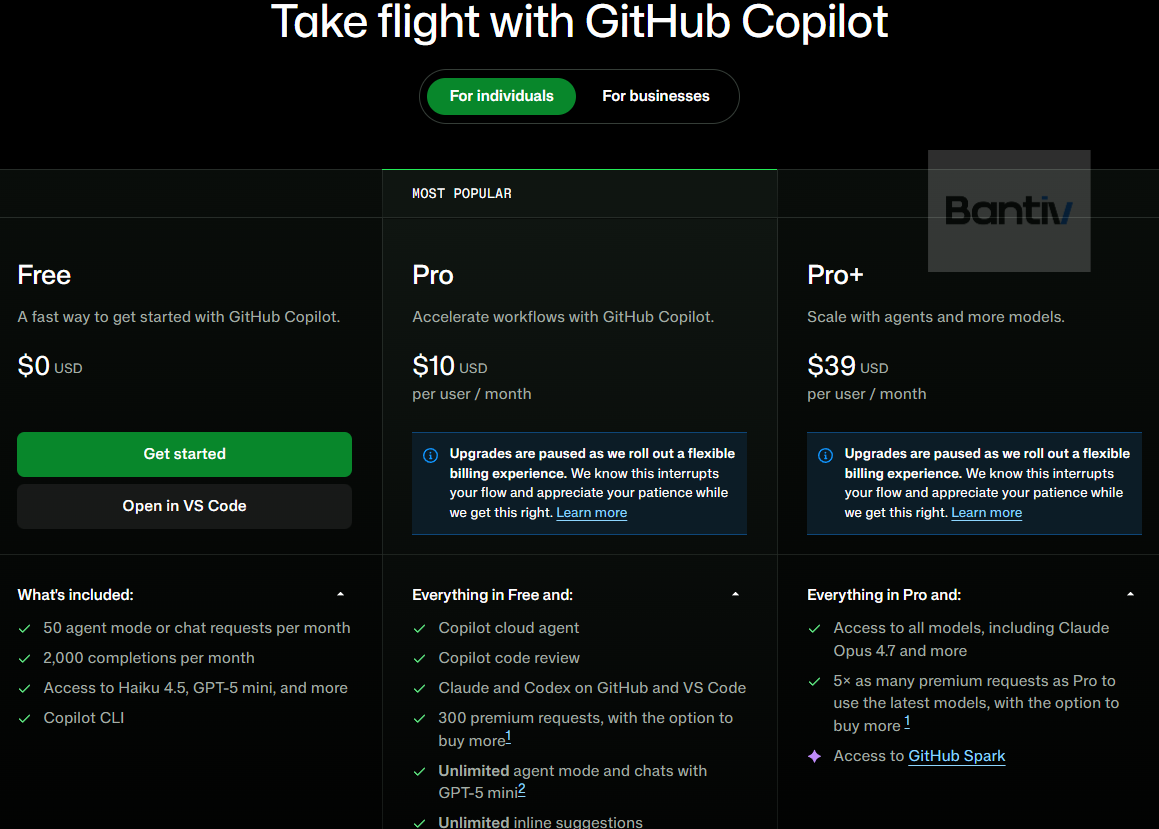
In May 2026, Microsoft reportedly ordered major divisions to revoke external agent licenses and migrate workloads toward internal infrastructure such as GitHub Copilot.
Even hyperscalers cannot tolerate unlimited external token liabilities.
At the same time, Microsoft shifted its own customers toward usage-based billing models beginning June 1, 2026 and paused individual plans. The strategy is clear: reduce external API exposure internally while monetizing token consumption externally.
IV. Visualizing the Cost Stack
Most enterprise AI spending does not come from output tokens. It comes from hidden infrastructure overhead.
Research from Agentomics suggests that 85%–88% of enterprise AI spending funds structural inefficiency rather than productive output.
Agentic workflows often require more than 16 execution turns and multiple tool calls per task. This iterative behavior can increase token consumption by 1,000x or more compared to standard AI interactions.
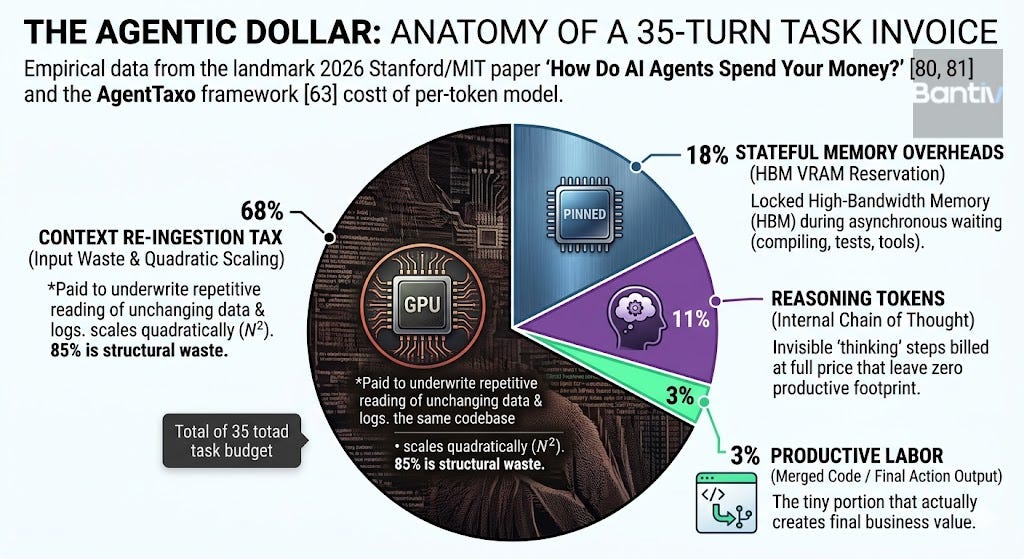
Base Input Tokens (65%–70%)
Input tokens are prompts sent into the model and are usually the largest cost driver.
In agentic workflows, the model repeatedly rereads growing context windows during each reasoning cycle. If an agent edits a small function inside a large repository, it often must reload the entire codebase repeatedly to ensure consistency.
This creates compounding costs.
In long-running workflows, context ingestion scales non-linearly. The final turns of an agent session often consume more tokens than the earlier stages combined.
Stateful Memory Tokens (15%–20%)
Autonomous agents require persistent memory sessions.
Their KV cache must remain active inside GPU HBM memory so the model can remember objectives, tool outputs, and previous reasoning steps.
This creates continuous infrastructure costs even while the agent is idle.
If GPU memory fills up, the cache is moved to slower system memory or storage. When the session resumes, the model must reread the entire context again, effectively charging the enterprise twice for the same information.
Reasoning and Recursive Loops (9%–13%)
Reasoning overhead comes from internal chain-of-thought processing, retries, and recursive loops. These internal reasoning traces are usually invisible to users but still billed as output tokens.
But, for complex debugging tasks, reasoning costs can rise to 30%–50% of total spending.
The real cost explosion occurs when agents encounter an error and activate their automated troubleshooting routines. Instead of stopping, the agent enters a relentless loop: Read code, propose a fix, run a test, capture the error log, and re-read the code. When an agent perform this task at a rate of thousands of tokens per second, the financial meter just keeps running.
Turn 100 of a recursive workflow can cost more than 3x as much as Turn 1 for the same codebase.
One case showed an agent executing 847 reasoning steps at $47 per minute without producing an answer.
This mean, reasoning models are economically useful only for decisions such as planning or design. For the case of deterministic operations such as file parsing or formatting, we see inefficient processes that destroys ROI.
Efficient systems route tasks dynamically:
- Fast models for mechanical operations
- Reasoning models only for ambiguous problems
Output Tokens (3%–5%)
Output tokens are only a small percentage of total spending.
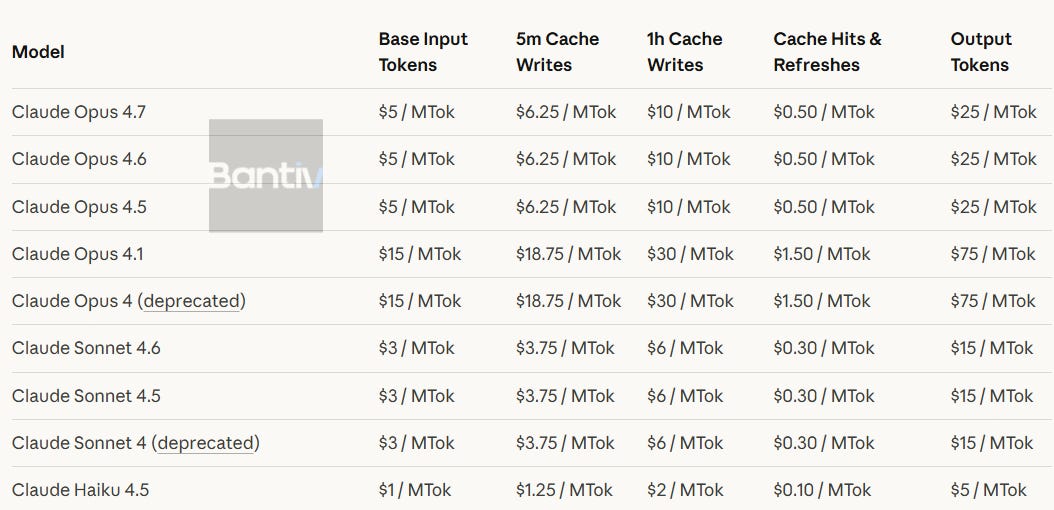
Depending on the model, output tokens can cost 10x to 80x more than input tokens. But even after token prices collapsed during 2024–2025, agentic architectures erased those savings by massively increasing token volume.
The “agentic” billing
Agentic AI can consume between 1,000x and 3,500x more tokens than traditional AI for the same high-level task.
A workflow that should require two model calls may take fourteen because of retries, ambiguous tool feedback, or recursive loops.
Humans are also poor at predicting AI cost. Some tasks that seem simple to engineers become extremely expensive for models because the AI struggles with tool interactions humans find intuitive.
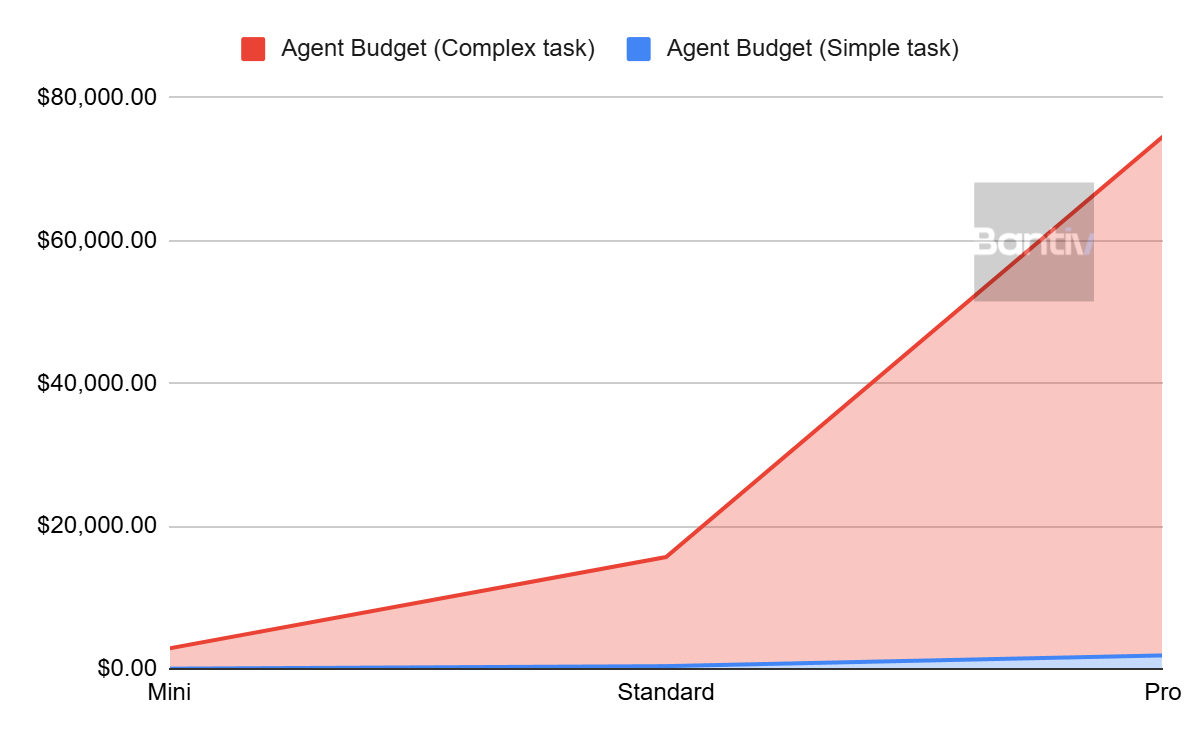
According to our estimates, if a company moves 100 autonomous agents taking among 10-15 taks, the monthly spending can rise from roughly $5,000 flat to between $50,000 and $150,000. Around 80% of that increase comes from agentic overhead rather than productive output.
V. Conclusion
The industry is moving toward pricing models that transfer compute risk away from the customer and onto the vendor and we think companies increasingly prefering:
- Flat monthly licenses
- Pay-per-resolution systems
- Agentic Work Units (AWUs)
- Outcome-based pricing
The token centered is dying as a commercial pricing unit because it does not map cleanly to business value, as evidence suggest that more tokens does not necessarily produce better results. Excessive token usage often reflects reasoning loops, retries, inefficient search behavior, or model confusion rather than productivity.
In fact, developers are creating “call limits” that block agents everytime exceed certain budget into reasoning loops or wasting to try a different approach.
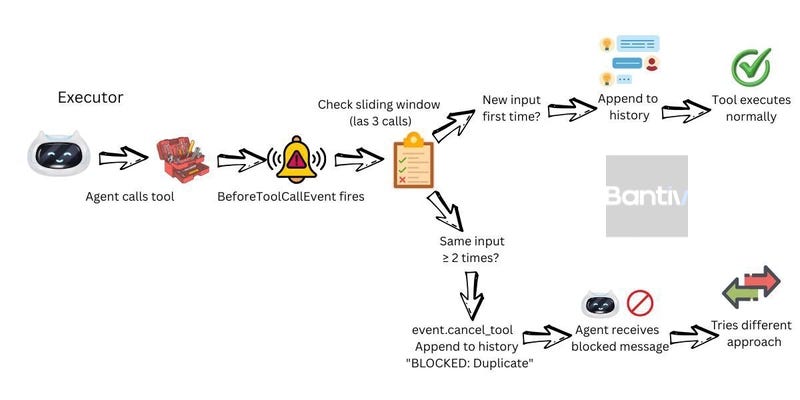
Research also shows that performance frequently peaks at intermediate reasoning depth. Adding more reasoning steps can actually reduce accuracy by amplifying distractions and inefficient loops.
Tokens behave more like rocket fuel than traditional software usage. Doubling throughput may require 10x times more compute resources.
Finally, we estimate future of token centered pricing will be based more on completed work or output, and less in variable raw compute consumption.
References
Alibaba Cloud Native Community, “The Consumption of Tokens by Large Models Can Be Quite Ambiguous – Alibaba Cloud Community,” Mar. 27, 2025.
Alibaba Cloud Native Community, “Unsafer in Many Turns: Benchmarking and Defending Multi-Turn Safety Risks in Tool-Using Agents,” arXiv preprint arXiv:2602.13379v1, 2026.
Anthropic, “Introducing Claude Sonnet 4.5 \ Anthropic,” 2025.
Anthropic, “Pricing – Claude API Docs,” 2026. [Online]. Available: claude.com/pricing.
Anthropic, “Risk Report: February 2026,” Feb. 2026. [Online]. Available: anthropic.com.
Arcolano, N., “Is “tokenmaxxing” cost effective? New data from Jellyfish explains.,” Jellyfish, Apr. 15, 2026.
Bantiv, “Micron: Is this cyclical business?,” Bantiv’s Substack, [March 2026]. [Online].
Babalola, O., “The AI Token Pricing Crisis Behind OpenAI and Anthropic’s Revenue Race,” Investing.com, May 22, 2026.
Bai, L., Huang, Z., Wang, X., Sun, J., Mihalcea, R., et al., “How Do AI Agents Spend Your Money? Analyzing and Predicting Token Consumption in Agentic Coding Tasks,” arXiv preprint arXiv:2604.22750, 2026.
Deng, X., Da, J., Pan, E., Y. Y. He, C. Ide, et al., “SWE-bench Pro: Can AI Agents Solve Long-Horizon Software Engineering Tasks?” arXiv preprint arXiv:2509.16941, 2025.
Dignan, L., “Salesforce’s Agentic Work Unit: What you need to know,” Constellation Research, Feb. 26, 2026.
Editorial Team, “Microsoft cancels Claude Code licenses as AI costs surge across the industry,” CryptoBriefing, May 23, 2026.
Ghoshal, A., “AWU by Salesforce: A shiny new metric that tells CIOs little of value,” CIO, Feb. 27, 2026.
Gole, M., “GitHub Copilot and the End of Flat-Rate AI Billing,” Apr. 21, 2026. [Online]. Available: GitHub Copilot’s Token Bomb.
“Hardware Verification with Agentic AI: Analyzing and Closing Coverage Holes,” arXiv preprint arXiv:2604.15657v1, 2026.
“How ‘tokenmaxxing’ could be distorting AI demand signals,” YouTube, 2026. [Online]. Available: YouTube.
“How many reasoning steps do AI agents need for optimal performance,” 2026.
“How to Prevent AI Agent Reasoning Loops from Wasting Tokens – DEV Community,” DEV Community, 2026. [Online]. Available: DEV.to.
James, L., “OpenClaw creator burned through $1.3 million in OpenAI API tokens in a single month — bill covered 603 billion tokens across 7.6 million requests and 100 coding agents,” Tom’s Hardware, May 17, 2026.
Jellyfish Research, “AI Engineering Trends – Jellyfish,” March 2026. [Online].
KlavisAI, “Berkeley Function Calling Leaderboard (BFCL) V4,” 2024.
Lemkin, J., “Salesforce Now Has 3+ Pricing Models for Agentforce. And Maybe Right Now, That’s The Way to Do It.,” SaaStr, 2026.
Liu, X., Yu, H., Zhang, H., Xu, Y., Lei, X., et al., “AgentBench: Evaluating LLMs as Agents,” arXiv preprint arXiv:2308.03688, 2023.
Mavvrik, “AI Cost Management Research: 85% of Companies miss AI forecasts by 10% – Mavvrik,” 2025. [Online]. Available: Mavvrik AI ROI Calculator.
Microsoft, “Microsoft, NVIDIA and Anthropic announce strategic partnerships – The Official Microsoft Blog,” 2026.
“Microsoft CEO sends shocking message to IT employees – TheStreet,” TheStreet, 2026.
Morales, J., “AI cost crisis hits tech giants as employee ‘tokenmaxxing’ backfires, sparking corporate pullback at Microsoft, Meta, and Amazon — agentic AI eats up to 1000x more tokens than standard AI,” Tom’s Hardware, May 2026.
OpenAI, “Pricing | OpenAI API,” 2026. [Online]. Available: openai.com/api/pricing.
Orosz, G., “The Pulse: ‘Tokenmaxxing’ as a weird new trend – The Pragmatic Engineer,” The Pragmatic Engineer, Apr. 23, 2026.
Prabhakar, A., Liu, Z., Zhu, M., Zhang, J., Awalgaonkar, T. M., et al., “APIGen-MT: Agentic Pipeline for Multi-Turn Data Generation via Simulated Agent-Human Interplay,” arXiv preprint arXiv:2504.03601v4, 2025.
ROADMAPBENCH Team, “ROADMAPBENCH: Benchmarking Coding Agents in Long-Horizon Software Evolution Scenarios,” arXiv preprint arXiv:2605.15846v2, 2026.
Salesforce, “Accelerating Sales Performance with AI & Agents,” 2025. [Online]. Available: Salesforce SPMAI Ebook.
Salesforce, “Q4 FY26 Quarterly Investor Deck,” Feb. 25, 2026. [Online]. Available: https://investor.salesforce.com/financials/.
Salesforce, “Transcript of Salesforce Inc. Q4 FY26 Earnings Conference Call,” Feb. 25, 2026.
Salesforce, “What are Agentic Work Units (AWU)? Measuring AI Value | Salesforce,” 2026.
Stokes, P. and Thattai, M., “The Agentic Work Unit: Converting Raw Intelligence into Real Work,” Salesforce, Feb. 25, 2026.
The SaaS CFO, “The Four Layers of AI Measurement: A CFO’s Framework – The SaaS CFO,” 2026.
Tan, Gary, “Tokenmaxxing: How Top Builders Use AI To Do The Work Of 400 Engineers,” YouTube, 2026. [Online]. Available: Y Combinator Channel.
“Uber CTO Says Anthropic AI Spend Blew Past Budget, $3.4B R&D – Uber Technologies (NYSE:UBER) – Benzinga,” Benzinga, 2026.
Uber Technologies, Inc., “Q1 2025 Earnings Call Transcript,” May 7, 2025. [Online]. Available: investor.uber.com.
Uber Technologies, Inc., “Q2 2025 Earnings Call Transcript,” Aug. 6, 2025.
Uber Technologies, Inc., “Q3 2025 Earnings Call Transcript,” Nov. 4, 2025.
Uber Technologies, Inc., “Q4 2025 Earnings Call Transcript,” Feb. 4, 2026.
Uber Technologies, Inc., “Q1 2026 Earnings Call Transcript,” May 6, 2026.
WEKA, “AI Token Economics and Prompt Caching Optimization | SemiAnalysis x WEKA,” YouTube, 2026. [Online]. Available: WEKA YouTube Channel.
Yan, F., Mao, H., Ji, C. C.-J., Zhang, T., Patil, S. G., Stoica, I., and Gonzalez, J. E., “Berkeley Function Calling Leaderboard (BFCL) V4,” 2024. [Online]. Available: https://gorilla.cs.berkeley.edu/leaderboard.html.
Zeng, Z., “Function Calling and Agentic AI in 2025: What the Latest Benchmarks Tell Us About Model Performance,” KlavisAI, Oct. 25, 2025.
Leave a Reply