1. Introduction: Time Is the new bottleneck
One fundamental constraint for artificial intelligence in 2026 is the access to reliable electricity. A critical mismatch has emerged between the construction cycles of AI facilities, which typically range from 12 to 24 months; in contrast, grid interconnection queues that now stretch between five and ten years in major technology hubs.
Consequently, “time-to-power” has replaced proximity to fiber as the defining bottleneck for digital infrastructure development, as hyperscalers cannot allow hardware clusters to remain idle while waiting for utility infrastructure to catch up. This urgency has transformed behind-the-meter (BTM) power from a niche strategy for enhancing reliability into a requirement for speed, well known in the technology industry. By creating self-contained energy systems, developers can bypass public grid queues and modernization requirements and bring computational capacity years before a traditional utility connection could be established.
2. What Is Behind-the-Meter?
Behind-the-meter (BTM) refers to energy systems and hardware installed directly on the customer’s side of the utility service meter. This architecture is fundamentally distinct from front-of-the-meter (FTM) assets, which are utility-scale projects designed to support the macro-grid; instead, BTM systems are tailored to serve the specific operational requirements of a single facility or industrial campus. A typical BTM configuration encompasses a diverse mix of energy technologies, including solar PV, battery energy storage systems (BESS), microgrids, heat pumps, and electric vehicle charging infrastructure in other contexts. These localized resources allow an entity to shift from being a passive consumer of electricity to an active orchestrator of energy, enabling the facility to capture and deploy power with precision to bypass wholesale market volatility. Economically, BTM assets are often described as bifacial because they capture value through two primary streams: they reduce the consumer’s electricity bill via peak-shaving and tariff arbitrage, and they can generate additional revenue by participating in ancillary services or virtual power plants. By utilizing existing grid connection points, these systems avoid the extensive delays and costs associated with establishing new utility connections, effectively turning a facility into a self-sustaining energy ecosystem.

3. Why AI Factories Are Driving BTM ?
The sudden increase of behind-the-meter power is a direct response to the gap of public utility grids to meet the AI-driven demand for electricity. Modern AI factories require high power densities that legacy grid infrastructure isn’t designed to handle, with individual high-performance racks demanding 30 to over 100 kilowatts and entire campuses scaling toward gigawatt-level loads. This massive surge in demand has resulted in a global interconnection crisis, where wait times for new grid connections in major technology hubs now take between five and ten years. Consequently, BTM power has evolved from a niche strategy for enhancing reliability into a mandatory requirement for speed-to-market, as hyperscalers cannot allow LLE and hardware clusters to remain idle while waiting for the grid to catch up. By creating self-contained energy campuses, AI developers can bypass grid queues and secure the near-continuous “five-nines” uptime required for sensitive training and inference workloads. The economic pressures of 2026 have further accelerated this trend, as surging demand charges and capacity market rates have turned passive energy consumption into a strategic threat to the bottom line. To address these needs, the industry is deploying a pragmatic technology mix that utilizes rapidly available natural gas turbines for immediate power, while scaling cleaner baseload alternatives such as fuel cells and small modular reactors to ensure long-term energy independence and sustainability.
BANTIV SOLUTIOS
Let’s Book a Call
4. BTM Architectures Emerging in 2026
The behind-the-meter landscape in 2026 is defined by a pragmatic hierarchy of technologies designed to solve the immediate power bottleneck while preparing for a decarbonized future. This diversified portfolio consists of five core architectures: rapidly deployable natural gas engines, commercially scaling fuel cells, solar-plus-battery hybrid systems, emerging small modular reactors, and integrated microgrids that orchestrate multiple onsite resources. These systems allow industrial operators and AI developers to transition from being passive grid consumers to active energy orchestrators, choosing the architecture that best aligns with their specific speed-to-market requirements and sustainability goals.
4.1 Natural Gas Reciprocating Engines
Natural gas reciprocating engines have emerged as the dominant behind-the-meter solution in 2026 primarily because they offer the fastest path to large-scale power. With a typical deployment window of just 18 to 24 months, this architecture directly counters the grid interconnection delays that now stretch toward a decade in major technology hubs. These engines serve as essential bridge power, providing the high-density baseload capacity required to energize multi-billion-dollar hardware clusters immediately upon facility completion. While highly effective for speed-to-market, this architecture presents a “sawtooth” cost profile where the gradual reduction of capital expenses is interrupted every ten years by significant rebuild and overhaul cycles. Additionally, operators utilizing this model must accept structural risks related to fuel price volatility and the carbon emissions associated with fossil fuels, which can complicate long-term environmental and social license goals. Despite these challenges, the immediate availability and reliability of reciprocating engines make them the default starting point for developers who cannot afford to let expensive computational resources sit idle.
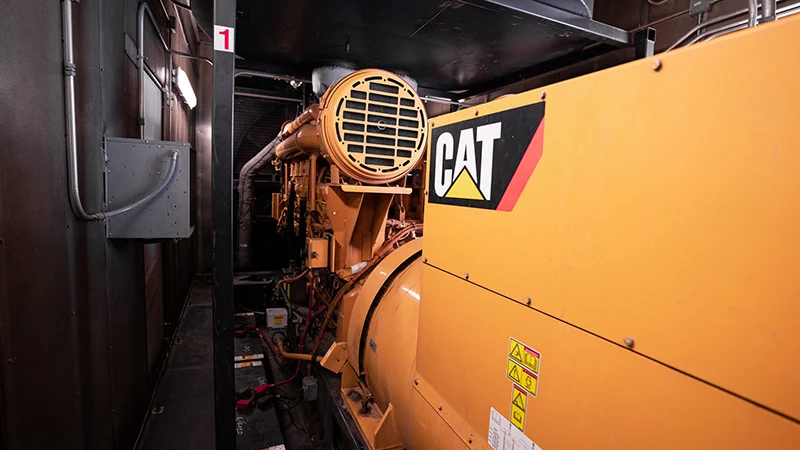
CoreSite’s OR1 has gas turbine generators
4.2 Aero-Derivative Gas Turbines
Aero-derivative gas turbines represent a sophisticated adaptation of jet engine technology for terrestrial power generation, offering a high-performance solution for facilities requiring rapid deployment. In the 2026 energy landscape, these turbines are a cornerstone of “bridge power” strategies because they can be brought online significantly faster than traditional utility-scale infrastructure, helping to close the gap between data center construction cycles and decade-long grid interconnection queues. While they offer excellent power density and reliability for immediate energization, they share a structural “sawtooth” cost profile with reciprocating engines; although capital costs are absorbed early on, these units accumulate operating hours quickly and require significant overhauls and rebuilds roughly every ten years. This maintenance cycle prevents the long-term cost of power from falling below a specific threshold, making them ideal for temporary bridge duty but potentially less economical than heavier frame alternatives if bridge duty evolves into a primary, thirty-year energy commitment.
Aero-derivative gas turbines are thermally more efficient, around 10% more than industrial gas turbines and have been applied to power plant design.
Gas turbines generate extremely high noise levels of 100-130 dB(A) from combustion, high-speed rotation, and exhaust discharge. The noise has significant mid-to-high frequency content that penetrates conventional structures and affects both workers and surrounding communities.
4.3 Heavy Frame Turbines
Heavy frame turbines, particularly those configured for combined-cycle operation, represent the more durable and efficient “heavy end” of the behind-the-meter fleet, designed for long-term infrastructure commitment rather than temporary bridge duty. These systems are the lowest-cost option for firm generation over extended horizons, with the potential for power costs to decline to approximately USD 55 per megawatt hour by year fifteen. However, the strategic value of heavy frame turbines is often limited by the same grid-related pressures they aim to solve; their massive scale, complex permitting requirements, and long equipment lead times make them difficult to deploy within the eighteen-to-twenty-four-month window required for modern AI facility completion. Consequently, while they are the preferred choice for a long-duration “marathon” strategy where private power becomes embedded site infrastructure, they are often bypassed in the initial “sprint” for speed-to-market in favor of more modular and rapidly available solutions.
4.4 Microgrids + Battery Energy Storage
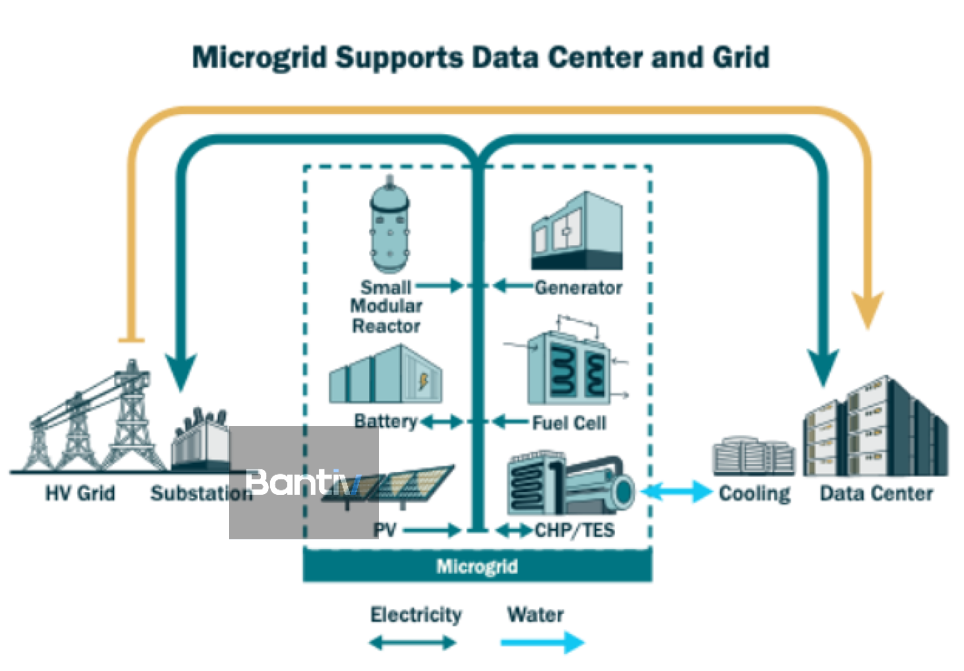
The integration of microgrids and battery energy storage systems (BESS) represents the most advanced evolution of the behind-the-meter model, transforming a facility from a passive load into an active energy orchestrator. By combining multiple sources such as on-site solar, wind, or gas, with high-capacity storage, these localized grids provide the high-availability “five-nines” reliability and resilience required for sensitive AI workloads.
The BESS component acts as a critical system-level buffer, capable of absorbing the multi-megawatt power transients and impulsive load swings inherent to large GPU clusters that can otherwise destabilize legacy grid infrastructure. Economically, these systems utilize “revenue stacking” to maximize return on investment, capturing value simultaneously through bill optimization strategies like peak shaving while generating new income by participating in high-value ancillary service markets. This architecture is increasingly becoming a strategic necessity for hyperscalers, as it allows for the pairing of intermittent renewables with firm storage to create a resilient, self-sustaining energy ecosystem that reduces long-term reliance on the distribution network.
According to the US Department of Energy Grid, connected microgrid system architectures are beneficial, as they support the grid working as “capacity reserve” system asset to aid the main grid during capacity constraints. Due to the challenging timelines for grid connection, microgrids can be built stand-alone as a “bridge” until grid connection is obtained, at which point they can provide essential support to the broader electrical grid. By strategically managing energy generation and storage, microgrids can offer ancillary services, such as frequency regulation and demand response, which are vital for maintaining grid stability.
5. Engineering the AI Power Plant
Engineering the modern AI power plant requires a fundamental departure from traditional data center design, moving from passive power consumption to active, system-level orchestration. The primary technical challenge is the extreme power density and volatility of high-performance GPU clusters, which can swing 60-80% of their peak current in under eight milliseconds. These impulsive transients create a dangerous mismatch with legacy electrical infrastructure, requiring a sophisticated architecture that integrates high-capacity battery energy storage as a critical buffer against grid instability and voltage sags.

To ensure the mission critical required uptime required for training runs, developers are co-engineering compute hardware with advanced power delivery and thermal management, transforming the rack into a self-contained, modular “factory cell”. This architectural shift increasingly relies on synchronous condensers to provide the physical rotational inertia and fault current contribution that inverter-based systems alone cannot satisfy.
Furthermore, the industry is transitioning toward 800-volt direct current (VDC) power distribution and direct-to-chip liquid cooling to manage heat loads that now exceed one hundred kilowatts per rack while maximizing energy productivity. Successfully managing this environment necessitates high-frequency telemetry and AI-driven energy management systems that provide the millisecond-scale visibility needed to coordinate protection schemes and prevent equipment trips during peak computational bursts.
6. The Economics of BTM
The economic landscape of behind-the-meter power in 2026 is defined by a transition from defensive reliability to offensive profit optimization through a model known as revenue stacking. This “bifacial” value proposition allows facility operators to simultaneously reduce utility costs and generate new market-based income streams. The primary defensive driver is the mitigation of soaring demand charges, which now account for up to fifty percent of a facility’s total electricity expenditure, especially following massive capacity market auction spikes. By utilizing peak shaving and tariff arbitrage, BTM systems strategically flatten a facility’s power profile and decouple operational peaks from the grid’s most expensive intervals. Offensively, these assets act as virtual power plants (VPPs), participating in high-value ancillary services and balancing markets to earn direct payments for stabilizing the macro-grid. This dual-engine revenue model significantly improves project bankability, with the potential to compress the simple payback period for a turnkey battery installation from eight years to as little as two or three. Investment is further accelerated by federal incentives such as the Investment Tax Credit (ITC), which can be amplified through domestic content adders. Consequently, major financial institutions now view the convergence of AI data center demand and private power as a generational investment opportunity, unlocking tens of billions in dedicated infrastructure capital to solve the global power bottleneck.
7. Access to Fuel Supply
As the energy landscape shifts toward autonomous power, fuel supply has emerged as an important bottleneck, effectively replacing grid interconnection as the critical path for project deployment. For the massive natural gas-based “bridge power” fleet that currently dominates the pipeline, project viability is measured by the availability of high-pressure pipelines and firm fuel delivery contracts. This transition has fundamentally reshaped the geography of data center development, moving capacity away from traditional hubs and toward regions with deep “energy depth” with gas infrastructure and permitting for dedicated lateral pipelines is feasible.
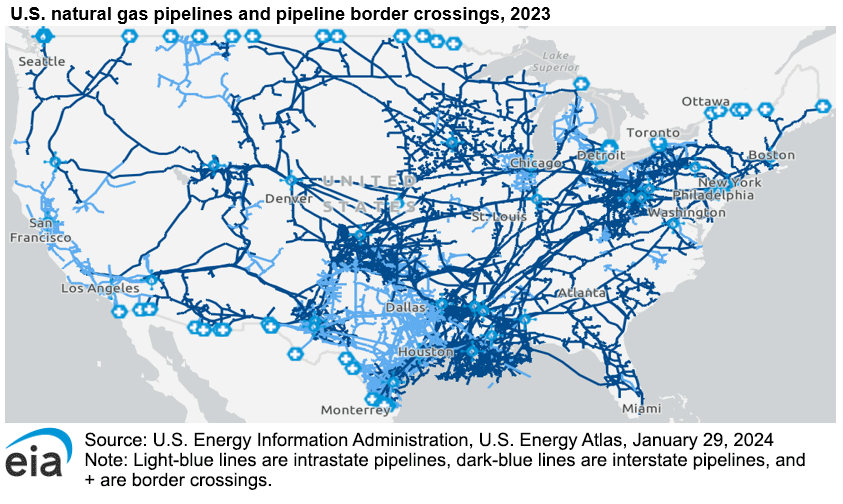
In these emerging hubs, developers are treating fuel access and compute as a single integrated thesis, often securing multi-gigawatt campuses with dedicated infrastructure that operates entirely outside legacy utility frameworks. However, this new reliance on fuel creates a persistent economic floor that capital amortization cannot eliminate, exposing operators to the volatility of commodities such as fuel prices. Consequently, the ability to secure long-term, scalable fuel supply is now the defining gatekeeper for speed-to-market, turning energy procurement teams into infrastructure planners who must navigate pipeline rights-of-way with the same urgency once reserved for utility interconnection studies.
At Bantiv, our solution of Site Selection and ESG compliance takes into account not only the grid requirements but also access to fuel supply sources and other important factors.
8. Regulatory Considerations of BTM
The rapid expansion of behind-the-meter power is currently colliding with regulatory and environmental frameworks that were never designed for large-scale grid secession. Regulators are increasingly concerned about the “bifacial” nature of these assets, leading to landmark rulings like those from the Federal Energy Regulatory Commission that challenge models appearing to bypass national transmission networks. This has triggered a sorting mechanism among states, where competitive regions are enacting legislation to enable self-generation while others impose strict ratepayer protections to prevent large loads from shifting infrastructure costs to the general public. Environmentally, the industry faces a significant trilemma as it balances the immediate need for resilient, gas-fired power against long-term corporate decarbonization mandates. While natural gas provides the necessary reliability for sensitive computational workloads, it introduces substantial carbon risks and conflicts with “green” credentials, forcing a strategic pivot toward cleaner baseload alternatives like fuel cells and small modular reactors. Safety considerations have also become a mandatory prerequisite for permitting, with dense urban deployments requiring strict adherence to fire codes and standards such as UL 9540A to mitigate the risks of thermal runaway. Ultimately, the transition to behind-the-meter power requires a complex management of local regulations and global sustainability standards, as non-compliance now represents a direct financial threat to operational continuity.
Generator noise levels need to be review since BTM require since could reach high levels as 100-130 dB(A).
Apple’s global headquarters in California
serves as a primary example of large-scale corporate behind-the-meter integration, featuring one of the world’s largest on-site solar energy installations. This configuration includes seventeen megawatts of rooftop solar and four megawatts of biogas fuel cells, supplemented by on-site battery energy storage to capture and manage excess power. These assets allow the campus to operate independently of grid fluctuations while contributing to the company’s broader commitment to being powered entirely by renewable energy.
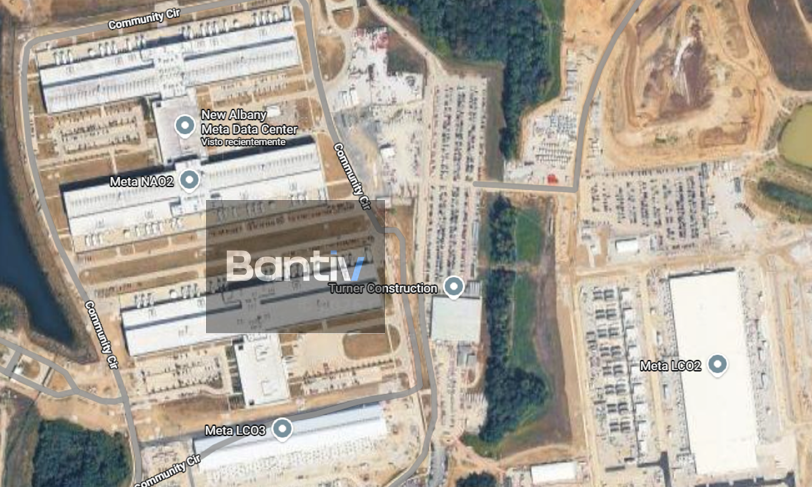
Meta’s development strategy in Ohio
Meta illustrates the shift toward behind-the-meter power as a mandatory requirement for speed-to-market in the AI era. To bypass chronic grid interconnection delays that can now stretch toward a decade, Meta is adding two hundred megawatts of localized generation to its Ohio AI campus. This project reflects a broader trend among hyperscalers who are creating self-contained energy islands to ensure their multi-billion-dollar hardware clusters do not remain idle while waiting for utility infrastructure upgrades.
Meta’s New Albany, Ohio Behind the meter BTM data-center campus is Aterio’s energy record tracks in four facilities (Socrates South, Socrates North, STY, and Neo) totaling 2 GW of combined capacity, 1.5 GW of gas generation plus two-hour battery storage.