
1 Introduction
The current data center industry is shifting from colocation to AI factories. These facilities require higher power densities than designs of the past. This transformation moved site selection beyond connectivity and land costs. Developers prioritize power availability and interconnection timelines as the determinants of project viability. In markets with constraints, grid access delays reach 5-8 years. Site selection has become an engineering assessment rather than a real estate exercise.
Hyperscale demand pushed single-site requests beyond 300 MW, requiring transmission service and utility studies. Furthermore, opposition has stalled $130 billion in projects, making community consent a requirement for development.
2 Why Data Center Site Selection Has Changed with AI
The industry is shifting from traditional colocation to AI factories. These facilities require power densities 15-30 times greater than previous data center generations. This transformation has moved site selection beyond a focus on variables such as connectivity, tax incentives and land costs. Attention has now moved to power availability , grid interconnection timelines and LLE delivery times as the primary determinants of project viability.
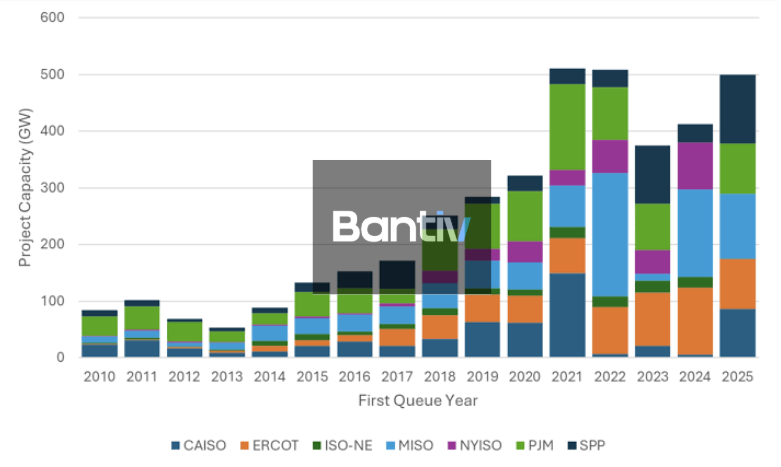
In constrained markets, the wait for grid access can range from 2-8 years. This makes infrastructure readiness the singular constraint on growth. Site selection is no longer a real estate exercise but a technical and multidisciplinary assessment of utility capacity and delivery. And across the US, there are currently over 10,000 projects in the pipeline, representing 1,400 GW of generation and storage capacity.
For investors and developers, understanding capital deployment is essential because infrastructure projects rarely progress in a perfectly linear sequence. Financing milestones, permitting, utility approvals, and equipment lead times often dictate the construction schedule more than engineering itself. In practice, we have seen projects where critical equipment remains in storage for months while waiting for transmission upgrades, utility interconnection approvals, or permitting to catch up. Structuring capital around these execution realities creates greater schedule flexibility, reduces idle capital, and lowers the financial risk associated with infrastructure delays.
At Bantiv, we have developed an infrastructure planning framework for our Site Selection Solutions that aligns capital deployment with realistic execution milestones. Rather than assuming that projects advance uniformly, our approach synchronizes financing requirements with the actual sequence of utility milestones, permitting, procurement, civil works, and equipment delivery. This enables investors and developers to stage capital more efficiently, reducing the likelihood of stranded assets, prolonged equipment storage, or idle construction resources while improving project flexibility and execution certainty throughout the development cycle.
3 The Infrastructure Readiness Framework
The Infrastructure Readiness Framework replaces geographic intuition with an engineering methodology for site evaluation. This approach analyzes technical dimensions to determine if a location is feasible before capital is committed. The first pillar involves verified electrical grid capacity at the serving bus. Developers must obtain written confirmation of deliverable megawatts to ensure the power density requirements match the utility supply.
The framework then quantifies utility interconnection timelines as the binding constraint on project delivery. Access to capacity in constrained markets requires 2-8 years, making queue position more valuable than the land itself. Analysis must also include transmission infrastructure because AI campuses require high-voltage service. Proximity to 138kV or 500kV lines dictates the complexity of tap-in points and substation engineering. Finally, we evaluate natural gas availability for behind-the-meter generation or bridging power. Evaluation includes pipeline pressure, volume capacity, and distance to the gas hub to manage grid bottlenecks.
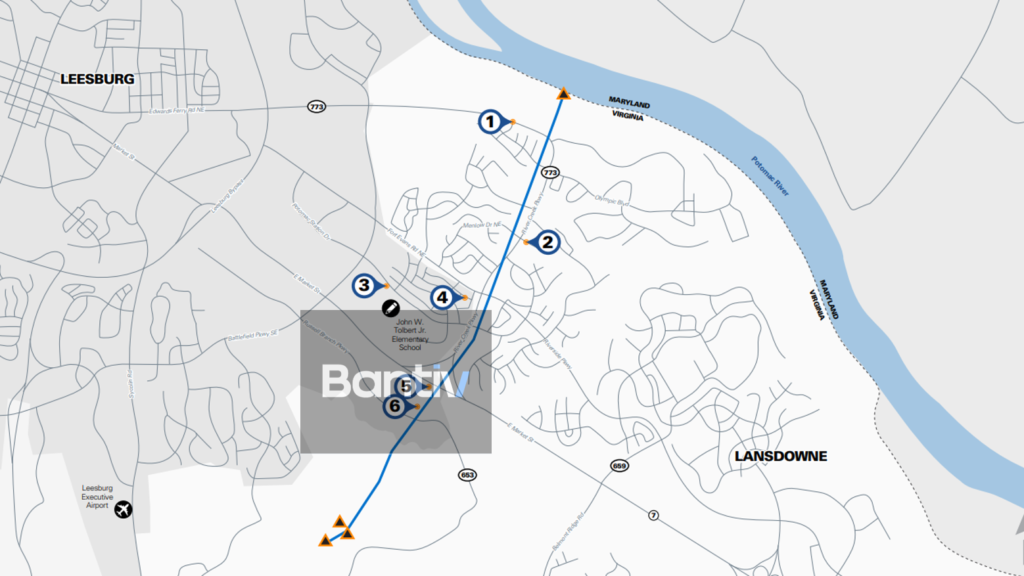
For instance, Northern Virginia’s power grid suffers from congestion driven by the explosive data-center boom in Loudoun County. While 230 kV lines (like Ashburn-Goose Creek) see the most frequent, high-dollar congestion, the backbone 500 kV network (e.g., Conaston-Pea) also experiences thermal constraints as bulk power is pushed to flat, high-density demand pockets.
Doubs – Goose Creek of Dominion Energy and located 9 miles from the Ashburn, Virginia data center hub has experienced heavy west-to-east flows. The current corridor has an existing 500 kV lattice structure and a double circuit 230 kV monopole.
4 Regional Analysis: Where Infrastructure Advantages Exist Across the United States
PJM
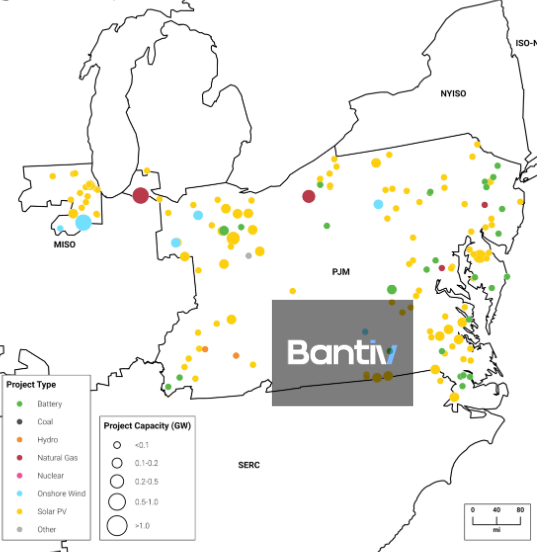
Northern Virginia serves as the most mature data center hub globally. This concentration has created a grid that consumes 4 GW of power, exceeding local generation capacity. Consequently, power availability is constrained, and the region faces infrastructure limitations for new operations. Interconnection timelines in the PJM market reach eight years, often requiring transmission upgrades before service delivery. PJM continues to manage a backlog of renewable and storage projects 25 GW of queued solar capacity; overall queue progress remains slow as the new framework is implemented.
ERCOT
Texas operates an independent grid that provides flexibility for load integration. The region features a diverse energy portfolio and land capable of hosting campuses exceeding 500 MW. While the state generates the most electricity in the nation, forecasted loads reaching 218 GW by 2031 create consumption pressure. For interconnection, developers of loads exceeding 75 MW must connect to transmission voltage, and current schedules face utility delays of 180 days. Solar generation is projected to become the primary driver of new capacity. To balance this, battery storage is expected to scale to over 20 GW. Natural gas projects are the fastest to pass through the queue; on the other hand, wind and solar projects are the slowest.

5 Engineering Due Diligence Before Land Acquisition
Owners conduct an engineering assessment before committing capital. The process utilizes a utility engagement strategy to confirm megawatts and establish a queue position. Developers obtain written confirmation of capacity at the bus and verify willingness to serve the load.
Power & Grid assessments determine the grid requires upgrades to support campus load density and determine a realistic timeline. These evaluations locate lines for redundancy. Power flow and contingency analysis determines conditions and simulates system response to grid disturbances. Analysis of short-circuit capacity ensures that fault currents do not exceed the limits of devices. A gas infrastructure review quantifies pipeline pressure, volume, and distance to the hub for generation. This study verifies that capacity supports current and future power requirements.
6 Designing Sites for 500 MW+ AI Campuses
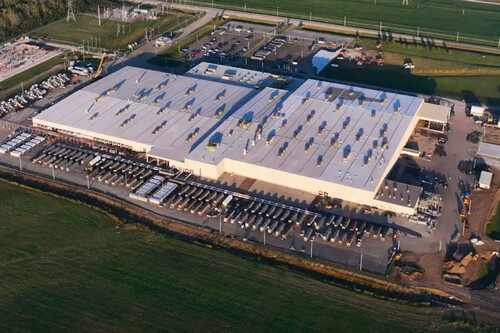
AI factories require a different approach to site selection because they operate at densities fifteen to thirty times greater than traditional centers. Developing campuses of 500 MW or more transforms these facilities from real estate assets into industrial infrastructure projects. At this scale, grid connection involves the construction of dedicated substations on-site to step down high-voltage transmission power. These substations manage energy delivery and provide the redundancy required for GPU clusters.
Developers integrate behind-the-meter generation, including gas turbines, to bypass grid bottlenecks and secure baseload capacity. Future expansion planning incorporates small modular reactors (SMRs) to provide scalable, carbon-free energy as technology matures in the 2030s. The internal architecture shifts toward high-voltage distribution, utilizing DC busways to move power. The current densities make liquid cooling infrastructure mandatory, which requires water closed-loops.
7 A Decision Framework for Owners, Developers, and Investors
The executive decision-making for infrastructure is based on a Proprietary Predefined Framework, we’ll discuss three of them:
Power
Owners must determine if the power capacity can be delivered within the project timeline. In constrained markets, grid interconnection waits extend from two to seven years, making queue position more valuable than land. Developers must obtain written utility confirmation of deliverable megawatts and study status before capital is committed to avoid delays caused by widening time-to-power expectation gaps.
Scaling potential
Our framework evaluates the potential of scaling up to support expansions over the following years in short and medium terms. AI factories demand densities that make necessary designs for 100kW to 200kW racks. This requires campus planning that secures contiguous acreage and implements modular substation architectures capable of reaching gigawatt scale.
Regulatory risk
Our framework analyzes if a location minimizes operational and regulatory risk. Community opposition has stalled $130 billion in projects, making local consent a mandatory input. Decision-makers must evaluate stability, including grid reliability, water rights, and the potential for policy shifts such as the removal of tax incentives.
Site selection depends on selecting locations where power systems, utilities, permitting, and civil infrastructure integrate into a scalable AI platform. At Bantiv we reinforce this by utilizing engineering due diligence as a strategic advantage to identify constraints and enable faster deployment of resilient digital infrastructure.