
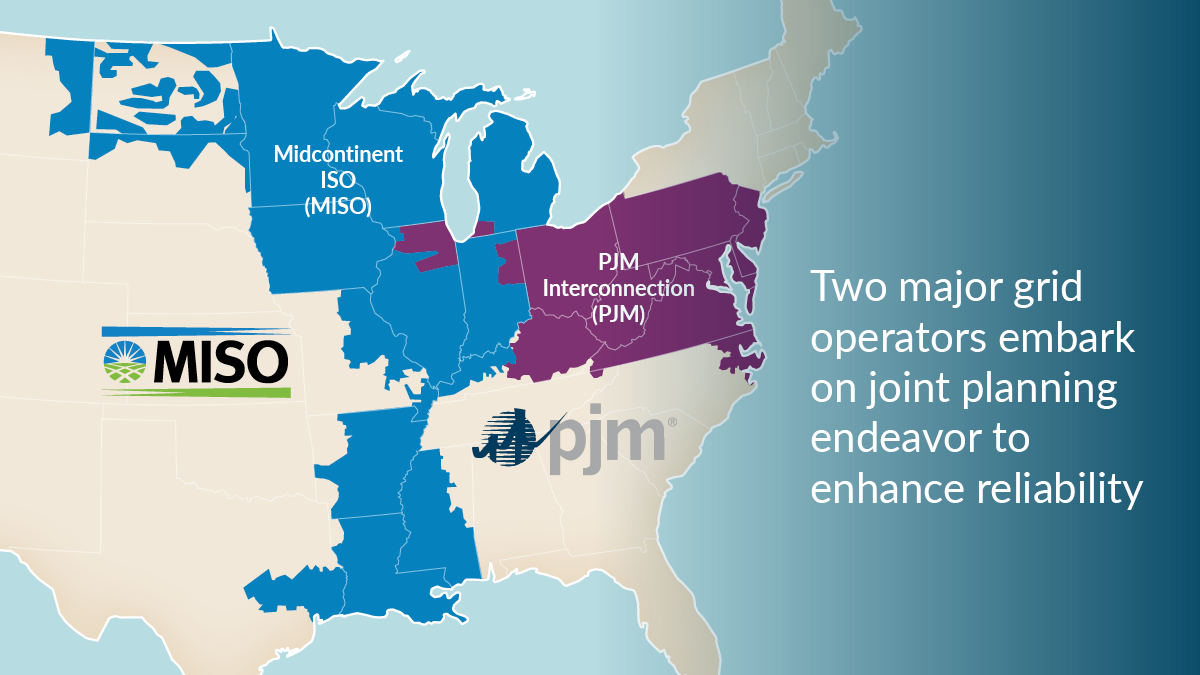
No region illustrates the collision between AI infrastructure and grid constraints more clearly than PJM Interconnection. As the regional transmission organization serving Northern Virginia’s “Data Center Alley” PJM is processing an unprecedented volume of large-load interconnection requests. The increase of these applications has fundamentally changed how utilities, regulators, and transmission planners approach grid expansion.
For projects to reach sufficient scale, the transmission owner coordinates with PJM to determine whether upgrades to the regional transmission network are required.
Recognizing that conventional procedures were becoming a bottleneck, PJM has introduced additional pathways. The proposed Expedited Interconnection Track (EIT), expected to become available in 2026, allows developers to pair large loads with sponsored generation resources in exchange for an accelerated study process. A third pathway emerged following FERC’s 2025 co-location order, permitting data centers to connect directly alongside power plants under net-withdrawal frameworks. By reducing the amount of power drawn from the broader transmission system, these arrangements can reduce the scope of required network upgrades.
Despite these reforms, obtaining grid access remains a lengthy process. The average project currently spends approximately 40 months moving through PJM’s interconnection queue before construction can begin. More importantly, completing the queue does not guarantee that electrical infrastructure will be available. According to Berkeley Lab, certain substations require as much as eight years from initial planning to commissioning.
Load Thresholds That Change Everything
One of the defining characteristics of PJM’s planning process is that engineering requirements increase dramatically as projects become larger.
At the national level, the U.S. Department of Energy has proposed standardizing interconnection procedures for all new loads exceeding 20 MW.
Within PJM, however, the threshold begins at approximately 50 MW. At this level, facilities are officially classified as large loads for regional forecasting purposes, triggering coordination between local utilities and PJM. Utilities such as Dominion Energy require specialized engineering studies for connections while states such as Pennsylvania have adopted model tariffs applying enhanced interconnection requirements to customers exceeding this capacity.
Projects seeking access to PJM’s expedited interconnection process face even higher requirements. The proposed Expedited Interconnection Track requires sponsored generation resources exceeding 250 MW of unforced capacity (UCAP), along with strong evidence of project readiness, including state-level support and substantial non-refundable study deposits.
Engineering Implications of Increasing Load Size
The size of the electrical load determines not only the permitting pathway but also the type of infrastructure required to support it.
Facilities smaller than approximately 5 MW are typically connected entirely through the local distribution network alongside other commercial customers. These projects are generally handled by the local utility without involving regional transmission planning.
Projects between roughly 5 MW and 20 MW frequently require dedicated distribution feeders, additional transformers, and upgrades to local circuits. Although these projects remain primarily distribution-level interconnections, engineering studies become detailed as utilities evaluate feeder capacity, voltage regulation, and equipment loading.
Once facilities exceed approximately 50 MW, transmission-level infrastructure often becomes necessary. Utilities must submit these projects to PJM as Large Load Adjustments, where they become part of the regional planning process. Connections at transmission voltages such as 230 kV or 345 kV become increasingly common.
At the largest scale, dedicated substations are often required, together with direct connections to the regional backbone transmission network.
Interconnection Queue Reform
To address growing congestion, PJM has fundamentally restructured its interconnection process by replacing the traditional first-come, first-served approach with a cluster-based study methodology. Rather than evaluating projects individually, groups of committed projects are now studied together, reducing repeated analyses while discouraging speculative applications.
The revised process is organized into three study phases separated by formal Decision Points. After each phase, developers must decide whether to continue or withdraw from the queue.
Before entering final agreement negotiations, part of the process requires developers to post financial security covering 100% of their allocated network upgrade costs.
These financial commitments are complemented by much stricter site-readiness requirements. At the time of application, developers must already demonstrate full control of the generating facility site for at least one year. By the final decision point, they must also secure complete control of both the generation site and all associated interconnection facilities for a minimum three-year period.
These measures are intended to remove speculative projects from the queue and reserve engineering resources for developments with a realistic probability of construction.
Permitting Remains the Primary Bottleneck
Although PJM’s reforms substantially accelerate the study process, they do not eliminate delays caused by permitting, siting, or equipment availability.
Approximately 53 GW of projects with executed interconnection agreements remain unable to proceed because of federal, state, and local permitting challenges, environmental reviews, land acquisition, or supply chain constraints.
PJM’s objective is to reduce study durations from more than four years to less than two years under the new cluster methodology. However, as of 2026, the average time from initial interconnection request to commercial operation still exceeds 8 years. Projects qualifying for the Expedited Interconnection Track could reduce the study phase as they satisfy the readiness requirements, including full site control, state support, and paired generation capacity.

System Impact Study (SIS) process
The increasing AI data centers projects has also transformed the technical analysis required for interconnection.
The interconnection process for connecting to the PJM grid is built upon a sequence of electrical technical studies designed to ensure the continued reliability and deliverability of the regional transmission system. These evaluations are primarily structured into three distinct phases of System Impact Studies, supplemented by engineering-focused Facilities Studies.
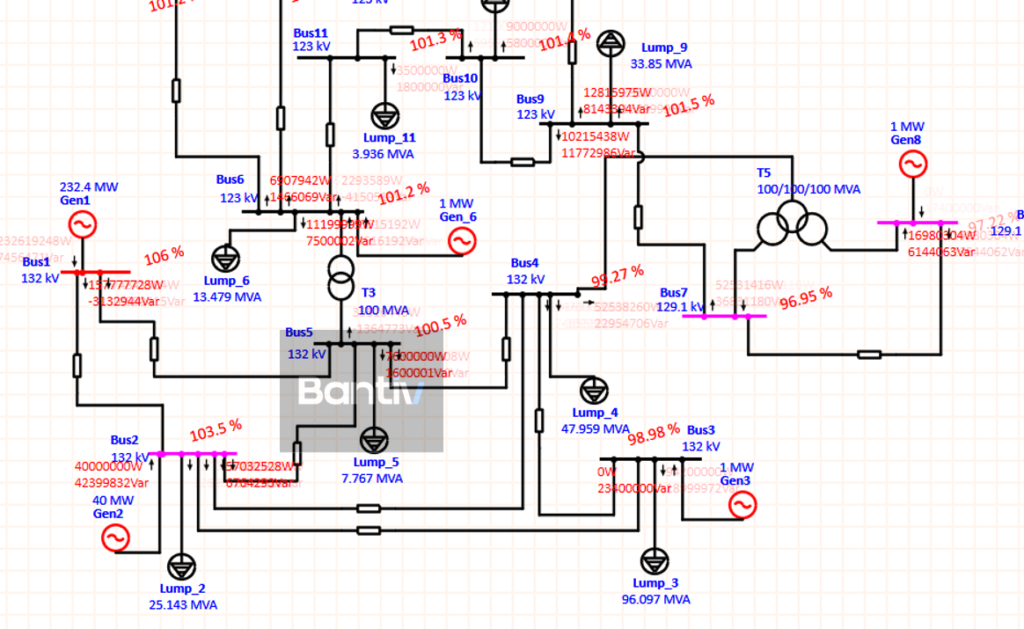
The technical journey begins in Phase I with an aggregate load flow analysis, which evaluates the proposed project’s impact on the grid across summer peak, winter peak, and light load conditions. This analysis utilizes AC contingency testing against mandatory NERC reliability standards to determine how the new injection of power affects the deliverability of energy to the aggregate PJM Network Load. During this initial stage, engineers conduct an affected system screen to identify potential impacts on neighboring grid operators, though the primary focus remains on identifying baseline thermal and voltage constraints.
At Bantiv we have supported Power & Grid Solutions providing Load Flow analysis of different grids across the US and internationally following the NERC reliability standards, and also vital for an effective Site Selection process.
In Phase II, the technical scope broadens significantly to include short circuit and stability analyses. The short circuit analysis is critical for identifying whether the new facility will cause fault currents to exceed the interrupting capability of existing circuit breakers; PJM typically identifies a violation if a project increases the fault current impact by one percent or more of a facility’s rating. Simultaneously, stability studies assess the dynamic electromechanical response of the system to ensure that the grid can withstand disturbances without losing synchronism. This phase also introduces the Facilities Study for physical interconnection, where the interconnected Transmission Owner provides conceptual engineering designs and cost estimates for the specific equipment required to physically link the project to the bus.
In Phase III of the System Impact Study, PJM performs a comprehensive retooling of all previous load flow, short circuit, and stability results. This phase is vital because it accounts for any changes or withdrawals of other projects within the study cluster, ensuring the final technical models reflect the most current grid topology. The primary technical output of Phase III is the identification of broader Network Upgrades. These are reinforcements to the wider transmission system that are necessary to mitigate reliability violations discovered during the study process. This phase also integrates the final results from any required Affected System studies to ensure regional coordination.
SSO
Projects located near series-compensated transmission lines must additionally perform Subsynchronous Oscillation (SSO) studies to ensure that electrical resonance cannot destabilize nearby generators.
For projects utilizing HVDC or merchant transmission facilities, PJM mandates specialized technical evaluations beyond the standard suite. These may include investigation into A.C. ferro-resonance, field investigations of existing harmonic content at the point of interconnection, and detailed modeling of dynamic performance like dynamic overvoltages or undervoltages on the AC network. Similarly, when large loads like data centers seek interconnection, PJM may require positive sequence dynamic and electromagnetic transient (EMT) models to properly characterize the load’s behavior under various system conditions. Throughout all these phases, the Facilities Study remains a constant engineering deliverable, providing the detailed design work, milestone schedules, and good-faith cost estimates necessary to translate theoretical grid impacts into physical construction reality.